Editorial analysis
Speakers, Rooms, and the Listening Context
Lessons from an ASR discussion involving speaker engineers, room interaction, directivity, and the limits of simplified comparisons.

This article is based on a detailed discussion in Audio Science Review’s original thread. It develops the discussion into an Informed Listening analysis; the original thread remains the primary source.
A loudspeaker is part of a room
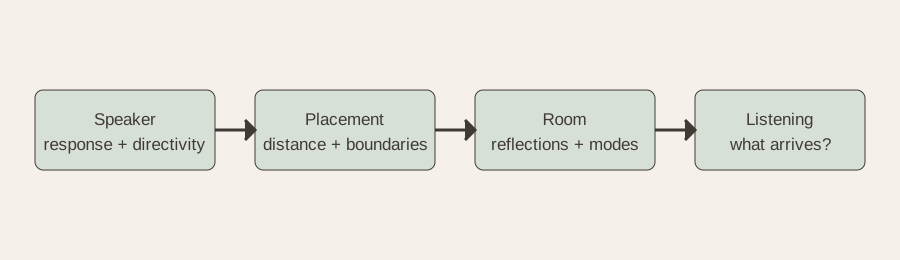
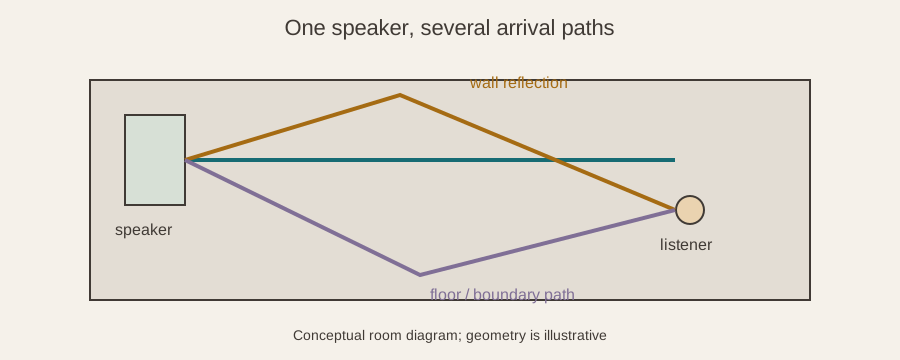
The speaker discussion makes a useful corrective to product-only thinking. A loudspeaker’s directivity, bass alignment, placement, and boundary conditions determine how its measured behaviour reaches a listener. The same model can be a convincing choice in one room and a frustrating one in another.
Directivity changes the problem
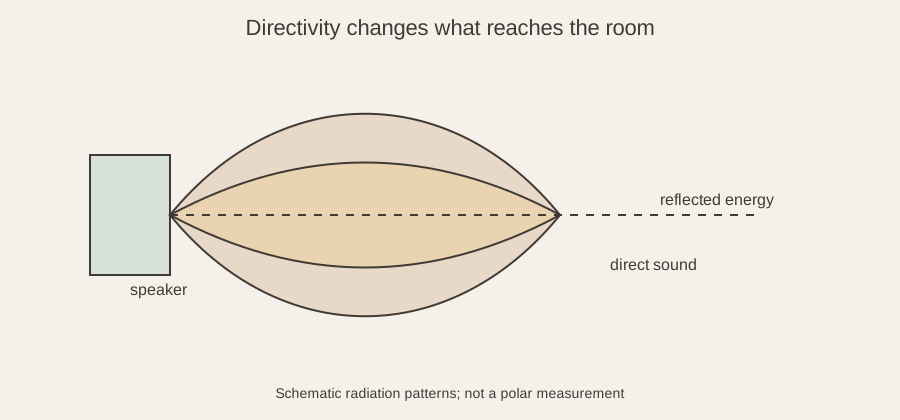
On-axis response is only one view. As frequency rises, the pattern of radiation changes; at low frequencies, the room dominates more strongly. A speaker with smooth directivity may produce a more predictable listening field than one that looks attractive on-axis but changes character sharply off-axis.
Group delay without mystique
The thread also debates timing and excess group delay. A delayed energy store can be real and measurable, but audibility depends on magnitude, bandwidth, room, level, and programme material. “Timing” should therefore be treated as a mechanism to investigate, not a magic label that automatically predicts musical dissatisfaction.
The practical hierarchy
Start with placement and room behaviour, then examine the speaker’s response and directivity. If the room creates a dominant bass problem, changing electronics may have little effect. If the speaker’s directivity is inconsistent, equalising one listening position may not solve the wider issue.
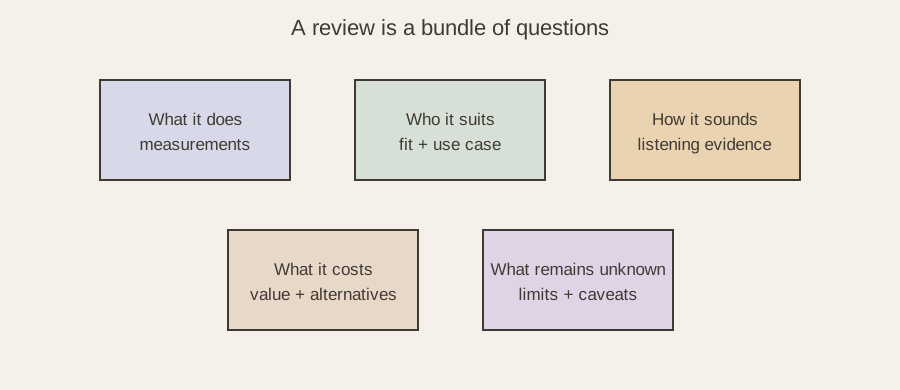
This hierarchy also explains why a single listening-position curve can mislead. Move the microphone and the bass may change substantially; move the listener and the direct-to-reflected balance may change. A useful loudspeaker review should therefore report the measurement window, directivity information, placement assumptions, and the limits of any room correction recommendation.
Editorial conclusion
The most transferable lesson is contextual: speaker measurements matter because they help predict interaction with a room. Their value increases when the review explains the conditions under which the measurements become audible.