Technical explainer
When Distortion Becomes a Listening Question
A careful guide to the ASR discussion about the audibility of headphone distortion.
This article is based on a detailed discussion in Audio Science Review’s original thread. It develops the discussion into an Informed Listening analysis; the original discussion remains the primary source.
The seductive simplicity of one number
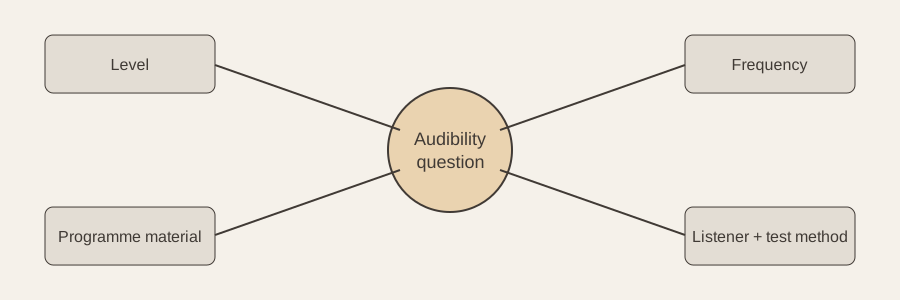
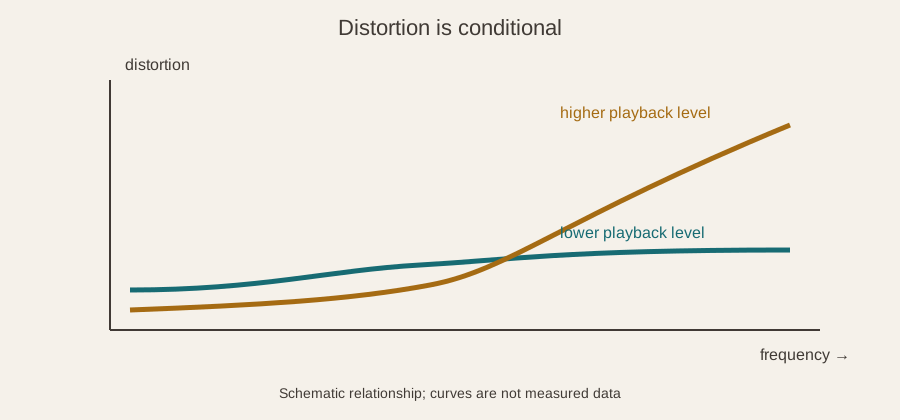
Total harmonic distortion is often presented as a percentage, but audibility is not a percentage. It depends on the frequency of the distortion products, playback level, masking from the music, the ear’s sensitivity, and whether the distortion changes with level or load.
Why bass deserves separate treatment
Low-frequency distortion can rise substantially at realistic listening levels. The fundamental may mask some products, but large excursions can also create audible roughness, loss of clarity, or compression. A result that looks harmless at one level may become relevant at another.
The listening-test problem
The thread’s sharpest disagreement concerns sighted listening. Knowing a measurement can bias expectations, but removing the graph does not make a casual listening impression a controlled test. A useful test needs level matching, repeatable material, a defined comparison, and enough trials to distinguish a reliable cue from expectation or fatigue.
What a responsible review can say
A review can report that distortion is elevated, identify where it rises, and explain the likely operating conditions. It should avoid converting that into a universal claim that every listener will hear it—or that nobody will. The honest conclusion may be conditional: relevant for loud bass-heavy listening, insignificant at ordinary levels, or worth investigating with a controlled comparison.
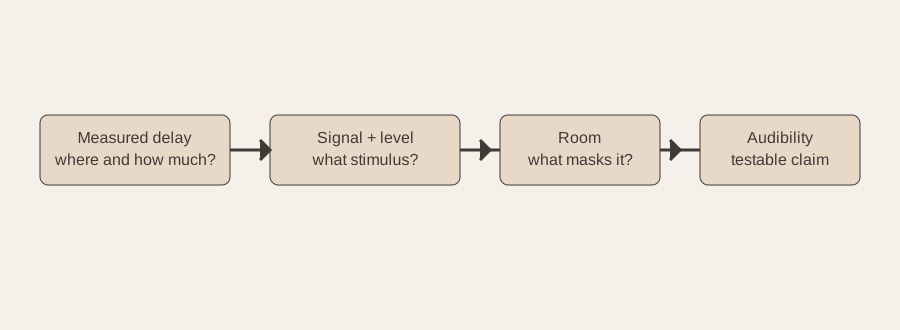
The right conclusion is neither “distortion never matters” nor “any visible distortion is audible.” It is that the review should identify where distortion rises, state the level and load, and explain whether the result leaves useful EQ or playback headroom. That gives a reader a testable reason to care instead of a frightening percentage detached from listening conditions.
Editorial conclusion
Distortion measurements are most valuable when they lead to a testable question. They tell us where to listen and what to control; they do not, by themselves, tell us what every person will perceive.